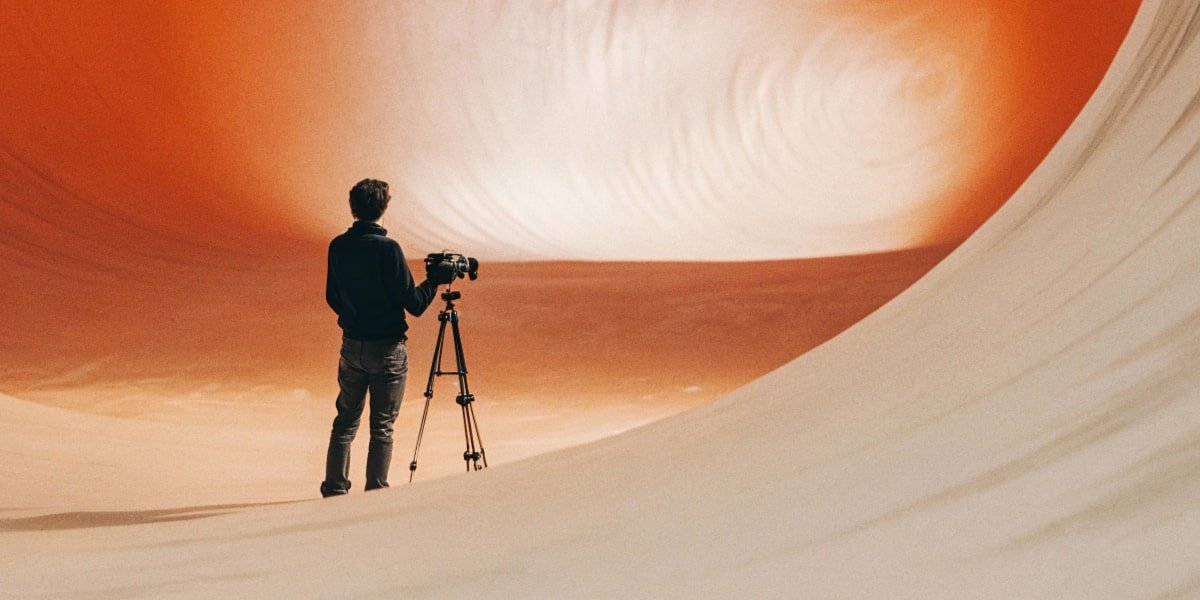
Breaking the Cage of the Mind
If you are reading this, you are a creator. Maybe a director, a writer, a painter, or just a soul in love with the magic of storytelling. And lately, you’ve probably felt a strange mix of anxiety and indescribable excitement. You are not alone.
For years, we whispered that comforting lie to each other: “AI won’t go anywhere… It’s just a cold calculator.” We treated it like a technical toy, a fleeting trend for teenagers on Discord.
We were wrong. And thank god we were. Because what we are witnessing right now isn’t a “tech invasion”; it is the liberation of art from matter. As the massive walls of Hollywood crumble (with former rivals like Netflix and Warner Bros. merging libraries), what’s actually collapsing are the financial and physical barriers blocking your creativity.
The era of the “Algorithmic Studio” hasn’t come to take the brush out of your hand. It has come to hand you a magic wand. This wand can build the universe in your mind with a single prompt.
This isn’t a story about how AI makes you obsolete. It’s a story about how it turns you into a Super-Creator. Grab your coffee. Lean back. Let’s dismantle the limits of your mind.
The $800 Million Freedom: The End of the “Construction” Era
What has always been the biggest enemy of creativity? Money. Physics. Gravity. To create a world, you needed bricks, cement, and millions of dollars. However, that barrier shattered.

Media mogul Tyler Perry was poised to spend $800 million to expand his studio in Atlanta. He planned to build 12 massive new soundstages. Then, he saw OpenAI’s video generation model, Sora.
He didn’t just pause the project. He canceled it indefinitely. At first glance, this looks terrifying. But feel the profound freedom in Perry’s reasoning:
I don’t have to build a set… I can just tell a computer.
This marks the end of the artist as a “General Contractor.” It marks the beginning of the artist as a pure “Creator.” The size of your vision is no longer limited by the size of your wallet. AI reduces the “logistic friction” between your mind and your masterpiece to zero. The only limit left is your imagination.
Alchemy and Transformation: From Expensive Paints to an Infinite Palette
Historically, high-end art was a monopoly of the elite because the tools were expensive. Remember Martin Scorsese’s The Irishman (2019)? De-aging Robert De Niro cost about $30 million in VFX. That was a luxury only a giant studio afford.
Today? Netflix CEO Ted Sarandos confirmed new AI tools can carry out that task for a tiny “fraction” of the cost.
Animation legend Jeffrey Katzenberg predicts AI will drop animation costs by 90%. You can read this statistic as “job loss.” Or, you can read it as: We can now tell all stories. Cost is no longer a barrier. You don’t need an army of 500 people. You just need one great idea. Art is shifting from “production” to pure “expression.”
The Invisible Brush: Destroying the Tower of Babel
AI isn’t just liberating the image; it’s liberating communication.
Take a look at “Invisible AI” technologies, like Flawless AI’s lip-syncing tools. They allow an actor to speak French or Japanese, and their lips move perfectly in sync with that language.
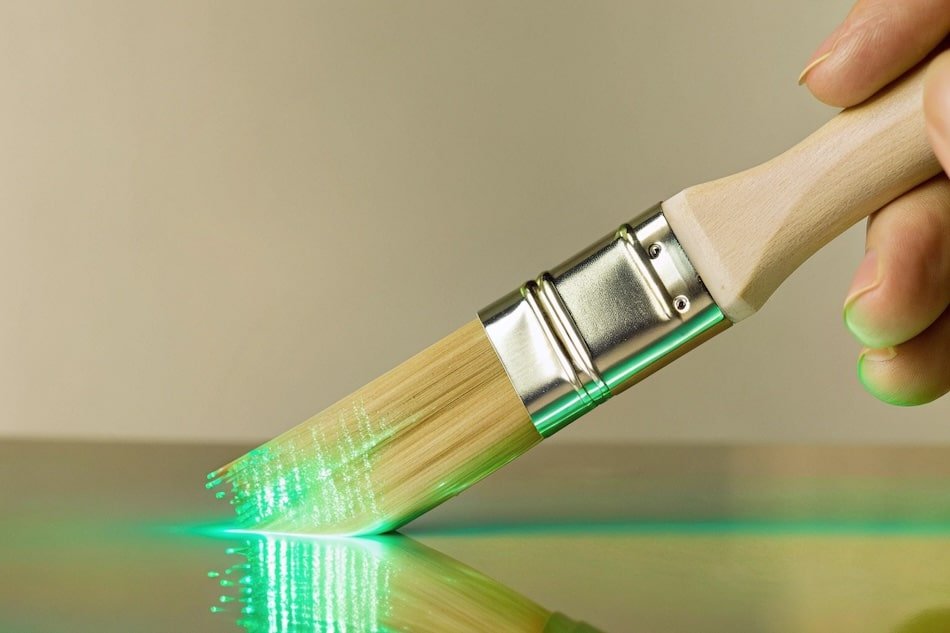
This is the erasure of cultural borders. To an American audience, a film by a French director feels natural. It seems as if it was shot in English, not like it’s “dubbed.” The artist’s soul flows directly into the viewer’s heart, without tripping over the language barrier.
Digital Twins: Human Evolution and the “Extended Phenotype”
Let’s borrow a concept from biology. Evolutionary biologist Richard Dawkins discusses the “Extended Phenotype”. He explains how living things use their genes to affect the world outside their bodies. For example, a beaver builds a dam. AI is the human “Extended Mind.”
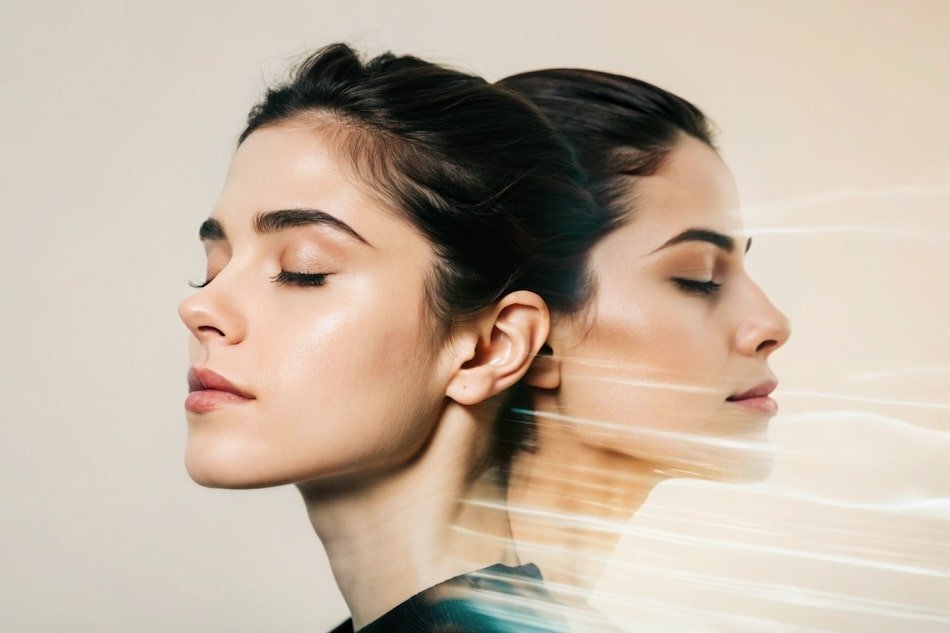
The “Digital Twin” controversy during the 2023 SAG-AFTRA strikes was really a reflection of our wish to transcend physical limits. Of course, the unions won a critical ethical victory by banning the use of these twins without “consent and compensation.”
The very existence of this technology tells us something profound. An artist can now be in multiple places at once. You can play your younger self and your older self in the same scene.
Our bodies age and tire, but thanks to our digital twins, our art becomes independent of time and space. This isn’t the extinction of the artist; it is our multi-existence.
A Historical Echo: The Robot Isn’t at the Helm, It’s in the Engine Room
In 1927, when cinema shifted from silent films to “talkies,” thousands of musicians lost their jobs. Unions protested with posters screaming, “The Robot is at the Helm!” It looked like a tragedy. But that shift birthed the greatest leap in cinematic art—complex dialogue, deep character studies, sound design.
We are at a similar threshold today. Silent film stars like John Gilbert couldn’t adapt because their tool (their voice) didn’t fit the new art. But those who adapted took cinema far beyond the theater stage. AI is not at the helm. It is in the engine room. The captain (the artist) still decides where the ship goes. The ship just moves a hell of a lot faster now.
The Spirit Beyond Matter
The Shift from Technician to Visionary
Fear is the most primal reaction to the unknown. But art is about walking courageously into the unknown. The AI revolution is changing the definition of the artist:
- Old Definition: The Artist is the one who operates the tool (Holds the brush, sets the lights).
- New Definition: The Artist is the one who selects, curates, and breathes soul into the work.
The market for AI in media and entertainment is projected to hit $99.48 billion by 2030. This massive number doesn’t signify a technological takeover; it signifies the empowering of creative tools.
As the great master Pablo Picasso said:
Everything you can imagine is real.
AI is simply the newest, fastest, and most fascinating way to build that reality. You no longer have to fight with bricks, budgets, or the laws of physics. Your mind is unchained. Your soul is free.
The canvas is now infinite. The question is: What will you paint on it?
Written by Discoverer of ART
Editor, Curator, Publisher.
Twitter (X) – @DiscovererOfArt